Truck Tire Wear Patterns
Tire Wear Patterns
A wear pattern is a clue, not a verdict. The same pattern can come from pressure, alignment, suspension, load, or a tire that has already been abused.
Name the pattern first, then decide what to check next before the tire gets rotated, replaced, or ignored.
The most useful inspection habit is to write down the axle position and tread-depth readings across the tire before moving it. Once the tire is rotated away, the pattern loses part of its evidence.
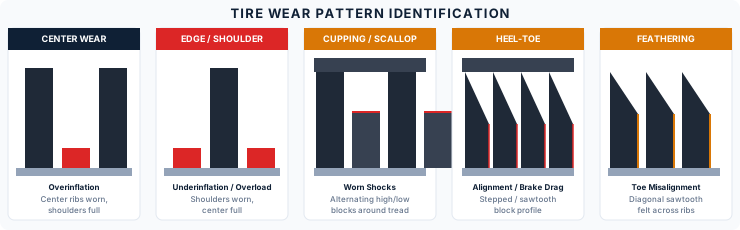
Fast pattern reference
| Pattern | What it often suggests | First check |
|---|---|---|
| Center wear | Pressure higher than needed for actual load | Cold pressure and loaded axle weight |
| Edge wear (both) | Underinflation, overload | Pressure, axle load |
| Edge wear (one side) | Alignment, camber, or scrub | Alignment and suspension |
| Cupping | Shock absorbers, bearings, or suspension bounce | Wheel end and suspension inspection |
| Feathering | Toe or alignment issue | Alignment and steering components |
| Heel-toe | Drive or trailer scrub, rotation interval, suspension | Rotation plan and axle condition |
How to read the tire before moving it
- Record the position: left steer, right steer, drive axle inner or outer, trailer axle inner or outer.
- Measure inner shoulder, center rib, and outer shoulder with a tread-depth gauge.
- Take the lowest reading from each rib group, not the nicest-looking groove.
- Photograph the pattern before rotation or removal, especially if a shop or alignment vendor will review it later.
- Compare the mate tire on the same axle. A one-tire problem points differently than a full-axle pattern.
- Ask what changed recently: pressure target, load, alignment work, suspension repair, route, or driver complaint.
Pattern clues by axle position
| Where it appears | What it may mean | First maintenance question |
|---|---|---|
| Both steer tires show similar shoulder wear | Pressure/load mismatch or steer alignment habit | Are cold pressures set from actual steer axle weight? |
| One steer tire wears on one shoulder | Alignment, camber, worn steering part, or impact history | Has the axle been aligned after the last curb strike or suspension work? |
| One drive dual wears faster than its mate | Pressure mismatch, diameter mismatch, or low inside dual history | Are dual pressures and tread depths matched within fleet tolerance? |
| Trailer tires show diagonal or scrub wear | Trailer alignment, axle tracking, tight-turn scrub, or loading pattern | Does the trailer run the same route and loading pattern repeatedly? |
| Cupping repeats on a new tire at the same position | Mechanical cause still present | Were shocks, bearings, bushings, and wheel end checked, or only the tire? |
Mistakes that hide the cause
Rotating a tire can make a truck look better for a short period, but it can also erase the evidence. If a steer tire is moved to a trailer before anyone records the pattern, the next person may only see a worn tire without knowing which axle created the wear.
Replacing the tire alone is the same kind of shortcut. A new tire installed on an axle with the same alignment, pressure, or suspension problem will usually start writing the same story into the tread.
When to stop
Stop and get the tire inspected when wear exposes body material, a bulge appears, the tire loses pressure repeatedly, or the vehicle develops vibration, pulling, or handling changes. Tread depth at the federal minimum — 4/32 inch steer, 2/32 inch other positions — is also a removal signal. Many fleets pull earlier than the legal floor to preserve casing value and keep wet-weather margin.
Related Maintenance Checklist
- Measure tread across three ribs.
- Record exact axle position.
- Photograph irregular wear before rotation.
- Check pressure before moving tires around.
- Compare the mate tire on the same axle.
- Inspect the axle, not only the tire.
FAQ
What causes center wear on truck tires?
Center wear — where the middle ribs wear faster than both shoulders — usually means the tire is running at higher pressure than the actual load requires. The overinflated tire contacts the road on a smaller, stiffer central area, concentrating wear there. Check the loaded axle weight and compare it to the manufacturer's load and inflation table to find the correct pressure for the load being carried.
What causes cupping on truck tires?
Cupping — also called scalloped wear, a pattern of repeating dips around the tire — typically signals a wheel-end problem that allows the tire to bounce unevenly on the road surface. Common causes include worn shock absorbers, worn or loose wheel bearings, and damaged suspension components. The tire wear is a symptom; the mechanical issue causing the bounce is the root cause. Fixing only the tire without finding the mechanical cause will produce the same pattern on the replacement.
When should I stop driving on a worn truck tire?
Stop when any of the following apply: tread depth has reached the federal minimums (4/32 inch on steer, 2/32 inch on other positions); cord or belt material is visible; a bulge appears anywhere on the tire; pressure loss repeats without a clear cause; or the vehicle develops vibration, pulling, or handling changes. These are not all-or-nothing thresholds — a well-managed tire program pulls tires before they reach minimums to preserve casing value and maintain a safety margin.
Source Notes
- Government 49 CFR 393.75 - Tires
- Government TireWise Tire Safety
- Industry U.S. Tire Manufacturers Association Tire Safety
- Site note TruckTireGuide.com editorial notes
Editorial Review
TruckTireGuide.com editorial team
Maintained by an independent editor with fleet tire-program experience in regional Class 8 operations, supported by transportation regulatory research and commercial vehicle technical writing.
Pages are checked against public regulations, manufacturer resources, industry references, and conservative field practice. The site does not approve tires for service or replace qualified inspection.