Truck Tire Wear Patterns
Center Wear
A center-worn tire usually tells you the middle of the tread has been doing more work than the shoulders. The cause is not always one thing, so check pressure, load, and application together.
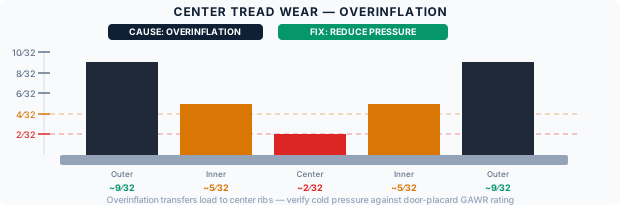
What it looks like
The center ribs are noticeably shallower than both shoulders when measured across the tread face. The difference may be small early — 2/32 inch or less — and grow over time if the cause is not corrected.
Symptom / Cause / First Check
| Symptom | Possible cause | First check |
|---|---|---|
| Center ribs lower than shoulders | Pressure higher than needed for actual load | Cold pressure and manufacturer load/inflation table |
| Center wear on several axle positions | Fleet pressure target may not match operating load | Recent scale weight and pressure policy |
| Center wear plus harsh ride | Light load or high pressure habit | Route and load history |
What to check first
- Cold pressure against the manufacturer load/inflation table
- Loaded axle weight — use a recent scale ticket
- Wear history on the same position across multiple tires
- Whether the fleet pressure target accounts for actual operating load
Do not diagnose from pressure alone
A high pressure reading explains only part of the picture. The better question is whether the pressure is high for the load being carried. A lightly loaded trailer or bobtail tractor may show center wear at a pressure that would be reasonable under a different load.
Look for the pattern across positions. Center wear on one tire can come from a local issue or a tire already worn before it arrived. Center wear across several tires in the same service suggests the fleet pressure target, route, or average load deserves a closer look.
Record before adjusting
- Cold pressure before any air is added or released
- Current load or most recent scale ticket if available
- Tread depth at both shoulders and center rib
- Axle position and whether the mate tire shows the same pattern
- Fleet pressure target currently posted for that position
Do not chase one reading
One center-rib reading can be misleading if the gauge lands on a damaged spot, a stone-drilled area, or an old flat-spot. Take several readings around the tire and compare the lowest center reading with the lowest shoulder readings. The pattern matters more than a single number written in isolation.
If the tire has been moved between positions, note the current position and the position where the wear likely started. Center wear that began on a lightly loaded trailer position should not be blamed automatically on the tractor position where the tire is found today.
Follow-up after correction
After pressure is corrected, measure the same ribs again at the next scheduled service. If the center rib continues to lose depth faster than the shoulders, the pressure target, load estimate, or route assumption is still wrong. If the pattern stabilizes, the old wear remains visible but should stop getting worse.
When to stop and get inspected
Stop when tread is near the federal removal depth (4/32 inch steer, 2/32 inch other), casing material is visible, vibration appears, or the tire has other damage beyond normal wear.
Related Maintenance Checklist
- Measure inner, center, and outer ribs.
- Compare mate tire if in a dual set.
- Review pressure target against actual load.
- Check for matching wear pattern across the axle.
FAQ
Is center wear on a truck tire dangerous?
Center wear reduces remaining tread life and, if severe enough, can bring the center ribs close to or below federal removal limits while the shoulder ribs still appear serviceable. Beyond tread depth, center wear by itself is not an immediate structural hazard — but it signals a pressure-load mismatch that should be corrected. Measure tread at the center and both shoulders to identify where the lowest point actually is.
Can correcting tire pressure reverse center wear?
Correcting pressure to match the actual load stops center wear from progressing, but it cannot restore tread that has already worn away. Once center wear has developed, track the remaining tread depth and correct the pressure going forward. The worn area will not fill back in. If the tire still has adequate remaining depth, it can continue in service with the corrected pressure.
How do I measure center wear accurately?
Use a tread-depth gauge at three points across the tire: inside shoulder rib, center rib, and outside shoulder rib. Repeat the measurement at several locations around the circumference, because wear depth can vary. Compare the center reading to both shoulder readings — a center rib measurably lower than both shoulders confirms center wear. Record the lowest reading from each location.
Source Notes
- Government 49 CFR 393.75 - Tires
- Government TireWise Tire Safety
- Industry U.S. Tire Manufacturers Association Tire Safety
- Site note TruckTireGuide.com editorial notes
Editorial Review
TruckTireGuide.com editorial team
Maintained by an independent editor with fleet tire-program experience in regional Class 8 operations, supported by transportation regulatory research and commercial vehicle technical writing.
Pages are checked against public regulations, manufacturer resources, industry references, and conservative field practice. The site does not approve tires for service or replace qualified inspection.